
AI & control

AI drafts your week. You decide.

How human-reviewed planning differs from automatic scheduling: what review actually looks like block by block, and what keeps it honest instead of a rubber stamp.

Aleem O'BalogunBy Aleem O'BalogunUpdated 6 min read

The short answer

Human-in-the-loop AI planning means the AI drafts a plan or a change, and you approve, amend, or discard it before anything happens, unlike autonomous schedulers that move your time automatically. You keep the judgement; the AI does the drafting. The test of a good implementation is whether review stays a real decision rather than a rubber stamp.

Two kinds of AI planning

AI planning tools fall into two camps. Autonomous schedulers take control of your calendar and move things around to optimise it. The other camp, which the industry calls human-in-the-loop, proposes a plan and waits for you to decide.

Both use AI. The difference is who is in charge when the plan meets reality, and it is not a detail; it is the whole design.
Why fully autonomous scheduling backfires

Handing your calendar to an autonomous agent sounds efficient until it reshuffles your week based on rules that do not know what this week is really about. You find out on Wednesday that something important got moved, and trust erodes.

Life planning is full of judgement calls a scheduler cannot make: which priority bends when the week gets tight, which commitment is non-negotiable, when to protect rest. Those decisions should stay with you.

What review looks like, block by block

In a human-in-the-loop tool, the AI does the tedious part (reading your priorities and what carried over, then drafting a coherent week) and hands you a plan to review. Review is a per-block decision, not a yes to the whole thing: keep this block, change or move that one, resize the third, drop the fourth entirely. Each drafted block carries the reasoning behind it, so the why is a glance rather than an interrogation, and declining is a first-class outcome; a discarded draft costs you nothing but the seconds it took to read.

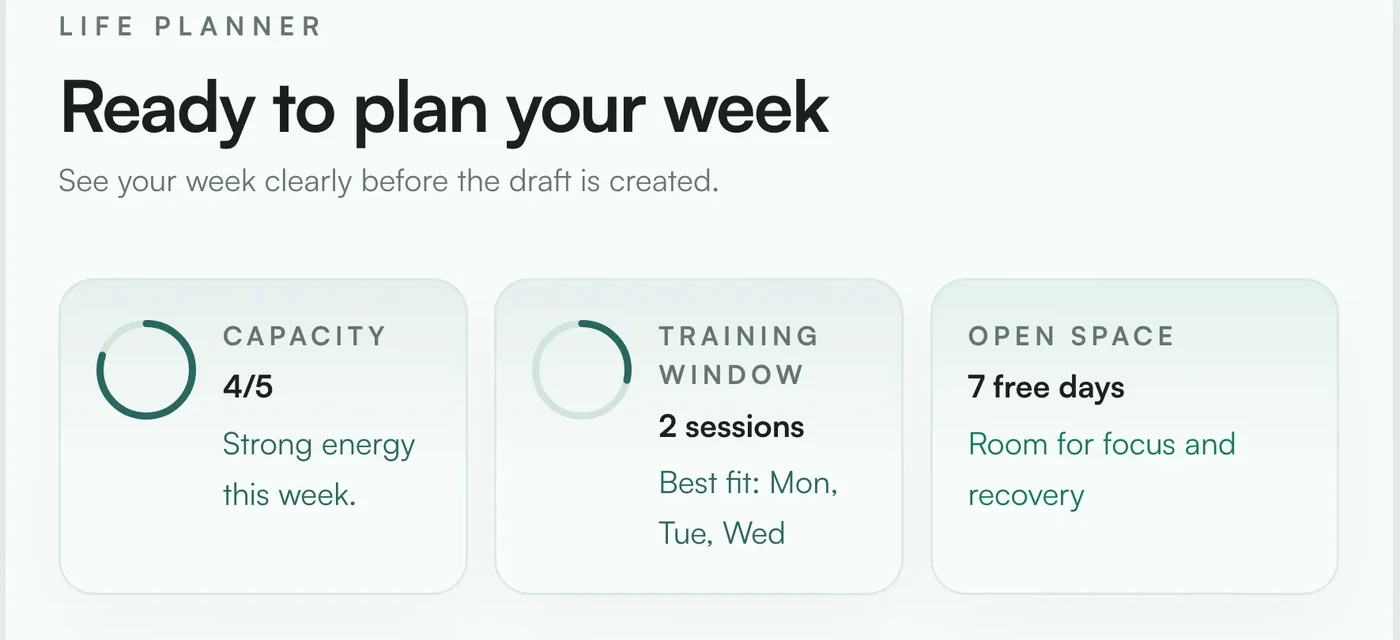
asambl's plan review: capacity for the week, a training window of two sessions, and seven open days, shown for you to check before any draft is created.
You see the week before any draft is created

What keeps review honest

The fair criticism of human-in-the-loop is that review can decay into rubber-stamping, and approval theatre is just autonomy with extra steps. Two things keep it real. The first is the tool's job: the draft has to arrive already reconciled and sized, clashes caught, training eased on the heavy days, blocks that fit the hours you actually have, so reviewing takes minutes of judgement rather than a re-planning session that tempts you to wave everything through. The second is yours: read the draft as a proposal, not a verdict, and change what deserves changing. A week where you moved one block and dropped another is the system working exactly as designed.

Where asambl draws the line

asambl is human-in-the-loop by design. Every proposed change is a draft you approve, amend, or discard, and nothing lands on your calendar until you say so. AI can be switched off entirely, and the rest of the app keeps working.

Your data stays on your machine. When AI is on, only the information needed for that specific request goes to asambl's managed AI, and it is not retained long-term. The intelligence is a tool you point at your plan, not a service that runs your life; the full data story is in the trust centre.