What a weekly reset actually is
A weekly reset is a short routine you run once a week to close the week that just ended and set up the one ahead. It is not a productivity system or a new app to learn. It is a habit: the same handful of steps, in the same order, at roughly the same time each week, so the start of every week feels deliberate instead of accidental.
The reason it works is boring and reliable. Most weeks do not go wrong because of one big failure; they drift because nothing ever gets closed off and nothing gets set up. A reset gives the week a clean edge. You end the old one on purpose and start the new one from a decision, not from whatever is loudest on Monday morning.
A calm 30-minute weekly reset
You do not need a two-hour ritual. Thirty minutes, once a week, is enough for the reset to do its job. Keep it in the same slot so it becomes automatic. Sunday evening and Monday morning are the common choices; pick whichever you will actually keep.
- Clear: empty your inbox, notes, and the scraps into one place
- Review: what happened last week, and what slipped
- Tidy: close finished things, carry the unfinished forward with a note
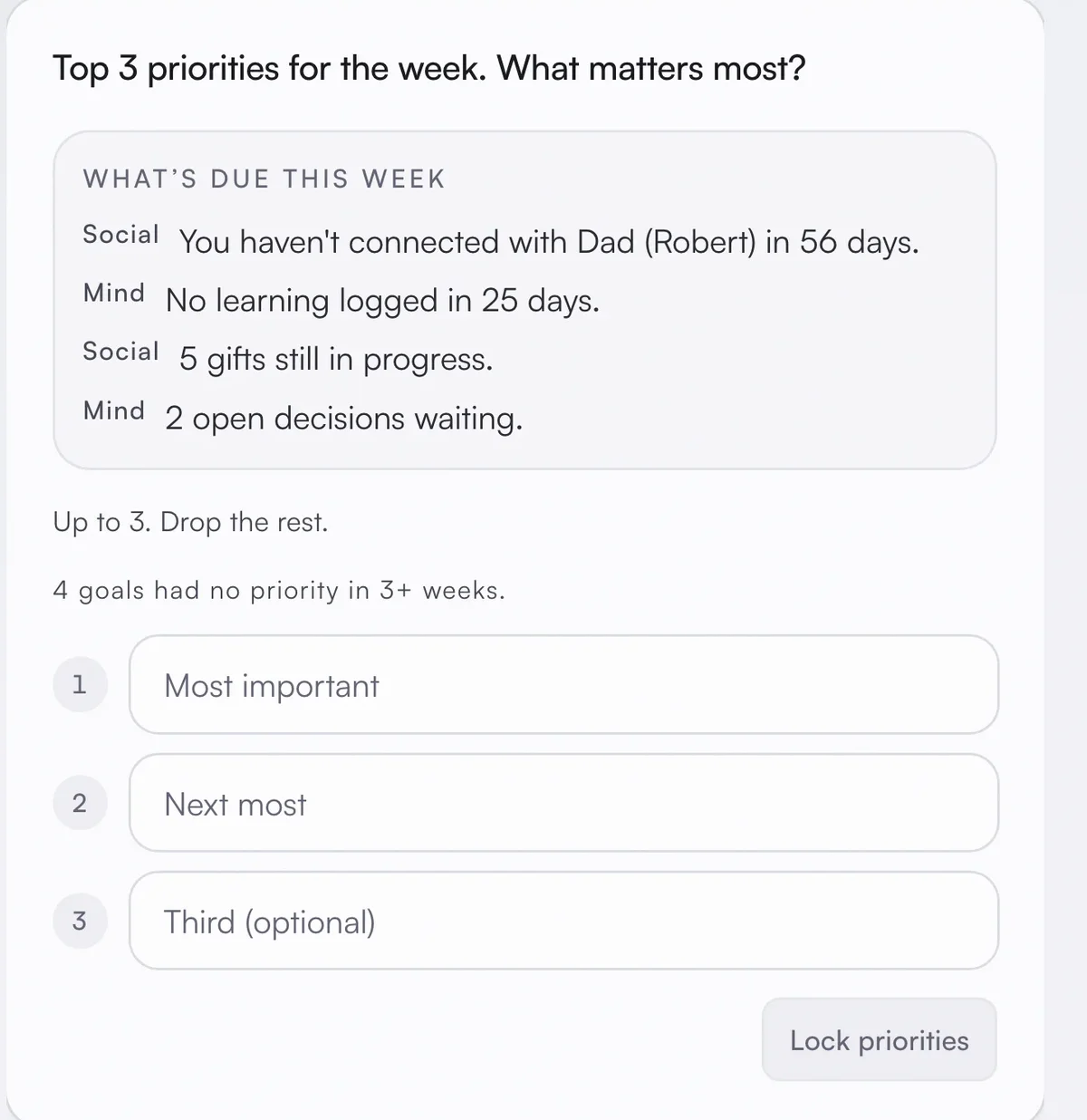
- Choose: three to five priorities across the whole of your life
- Block: put them into the real gaps around your fixed commitments
Reset your whole life, not just work
Most reset routines you will find online quietly assume the week is a work week. They tidy your task list and your calendar and stop there. But the things a reset is meant to protect, training, money decisions, the people who matter, the plans you keep putting off, live outside the work calendar, which is exactly why they get missed.
A good reset gives each area you care about a place, at a level of detail that fits. Not everything needs a slot. Money might be one decision this week; relationships might be one evening and a birthday three weeks out. The point is that nothing important is invisible when you choose what the week is for.
Where asambl fits
asambl is a private weekly planner for macOS and Windows built around exactly this rhythm. Instead of resetting from a blank page, you set your priorities and asambl drafts a week across your chosen life areas, work, health, money, relationships, growth, and joy, sized to the time you actually have. You review the draft, change what does not fit, and approve it. Nothing lands on your calendar until you accept it.
The review half of the reset is built in too. At the end of the week asambl helps you see what happened and carries the unfinished work forward with context, so next week's reset starts from reality rather than from zero. AI is on by default and can be switched off, and your notes and plans stay on your own computer as portable files.